Using Positive Affirmations to Manage Anxiety
Anxiety has a way of convincing us that something is wrong right now. It shows up as a racing heart, an upset stomach, a tight chest, a mind that won't stop spinning through worst-case scenarios. It can be present in the never-ending cascade of
“What if…?” and
“What if…?” and
“What if…?”
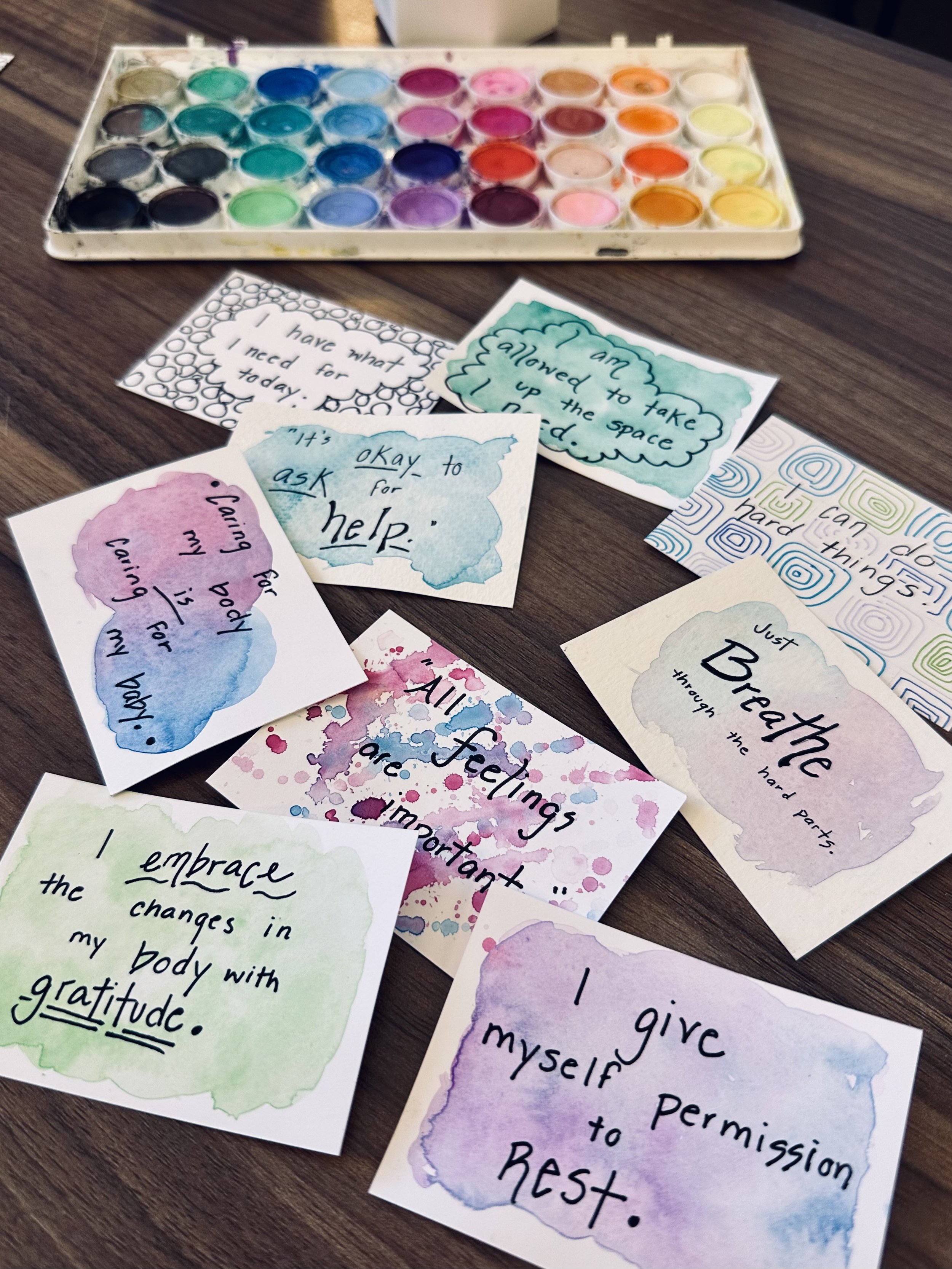
One tool that I find helpful is the practice of positive affirmations. Affirmations aren't about pretending anxiety doesn't exist or forcing yourself to "just think happy thoughts." Instead, they're a way of gently interrupting the anxious spiral and offering your nervous system a different, more grounded message to hold onto.
Why Affirmations Can Help
Anxiety often narrows our focus onto the worst outcomes, even imagined risks and dangers can feel very real. Affirmations work by giving your mind an alternative thought to hold onto. These more adaptive thoughts are rooted in truth, not fear. Repeated often, they become easier to access during times of stress and anxiety. Think of them less like a magic fix and more like a muscle you're building over time.
The best affirmations are those that feel completely authentic to you, but sometimes these are hard to develop on your own. Below are some affirmations I often share with clients.
When You're in the Grip of a Panic or Anxious Moment
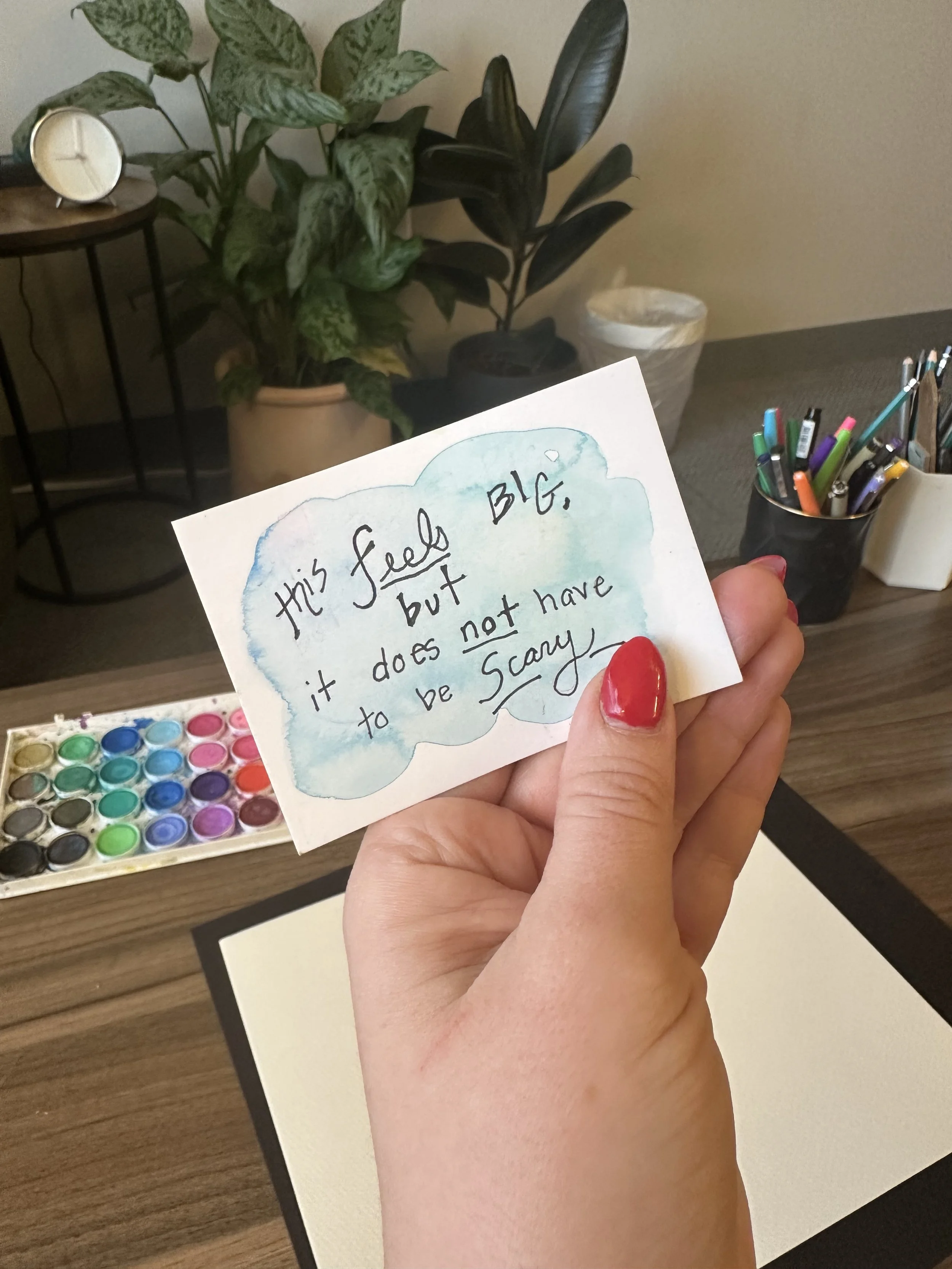
These affirmations can help remind your body that discomfort isn't the same as danger:
"This feeling is uncomfortable, not dangerous."
"I have handled hard moments before; I can handle this one."
"Anxiety is a wave: it rises, peaks, and passes."
“I can do hard things”
“This feels big, but it doesn’t have to be scary.”
"I don't have to believe every thought my mind produces."
"Right now, in this moment, I am okay."
"I can feel afraid and still do what matters."
"One step at a time is enough."
When Anxiety Shows Up as Social Fear
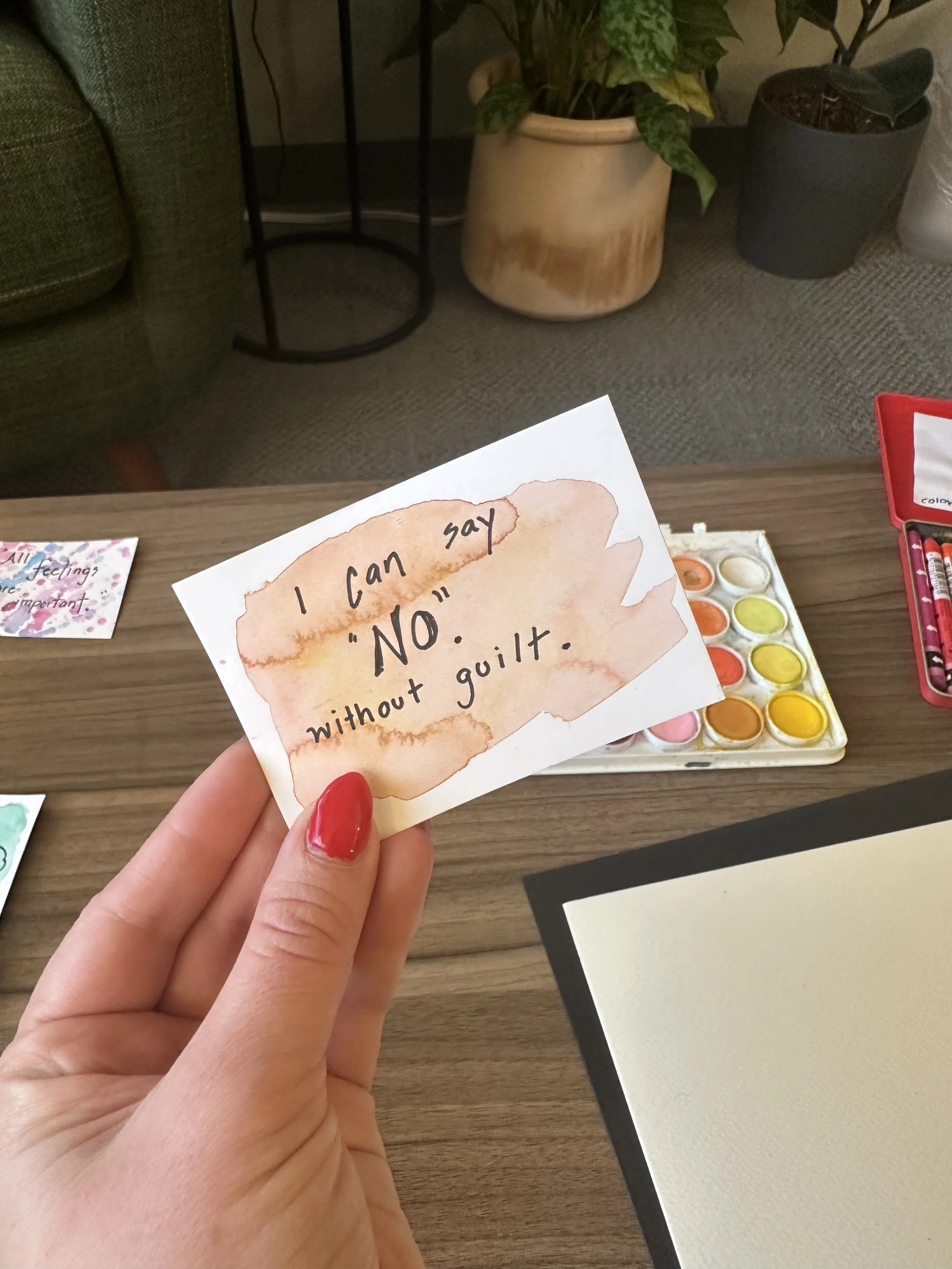
Social anxiety often convinces us we're being watched and judged far more closely than we actually are. These affirmations can help bring your brain back to reality.
"I don't need everyone's approval to be okay."
"People are mostly thinking about themselves, not grading me."
"Awkward moments pass; they don't define me."
"I can be nervous and still connect."
“I am enough.”
“I am okay just as I am.”
When You Need to Feel Grounded in Your Body
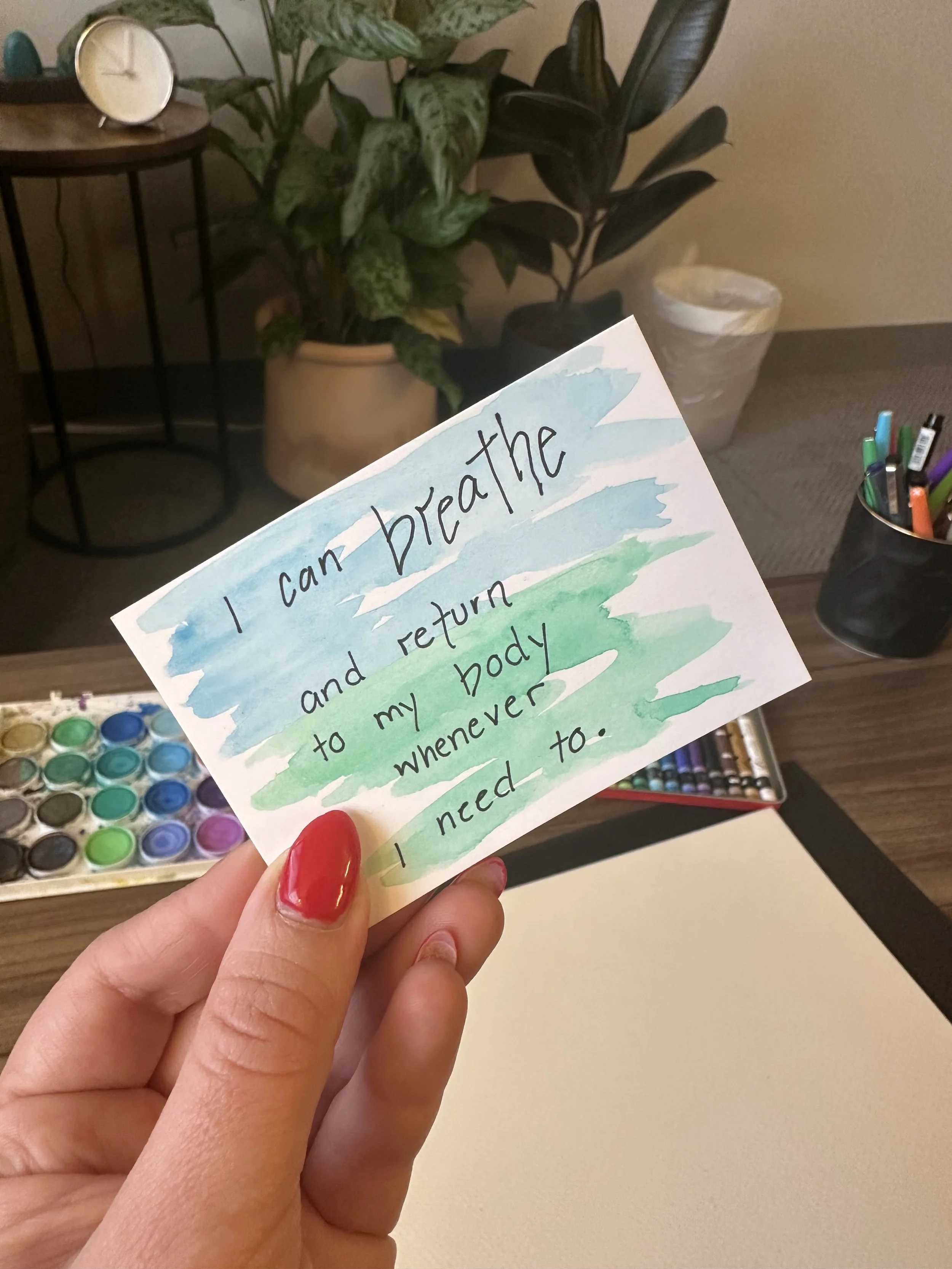
Anxiety lives in the body as much as the mind. These affirmations pair especially well with slow, deliberate breathing:
"Right now, in this exact moment, I am safe."
"I am not in danger; I am just briefly uncomfortable."
"My body knows how to relax and let go of tension."
"I can feel my breath, and my breath anchors me."
“I can trust my body.”
“Just breathe through the hard parts.”
"When I inhale, I bring in peace. When I exhale, I let go of fear."
When You Need Perspective
Sometimes what helps most is zooming out and remembering your own resilience:
"I have survived every anxious moment so far, and I will get through this one too."
"I choose to focus on what I can control and release what I cannot."
"This feeling is temporary, and it will pass."
“This one day, one moment, in my life full of days.”
How to Use Affirmations
A few tips to make affirmations more effective:
Practice when you're calm, not just when you're anxious. Repeating affirmations during regulated moments helps build the neural pathway, so it's easier to access during a harder moment.
Pair them with your breath. Say the affirmation on the exhale, when your body is naturally shifting into a more relaxed state. Focus on your exhale being twice as long as your inhale to really regulate your nervous system.
Say them out loud when you can. Hearing your own voice can make the words feel more real and grounding than simply thinking them.
Choose the one that fits the moment. Finding an authentic affirmation is the absolute key. What do you need in this very moment?
Write them somewhere you'll see them. A sticky note on your mirror, a note in your phone, or a card in your wallet can offer support before anxiety even has a chance to build. I keep affirmation cards in my office. I have many I’ve premade but I have plenty of blank ones for the moment we find something that feels totally authentic and helpful for you.
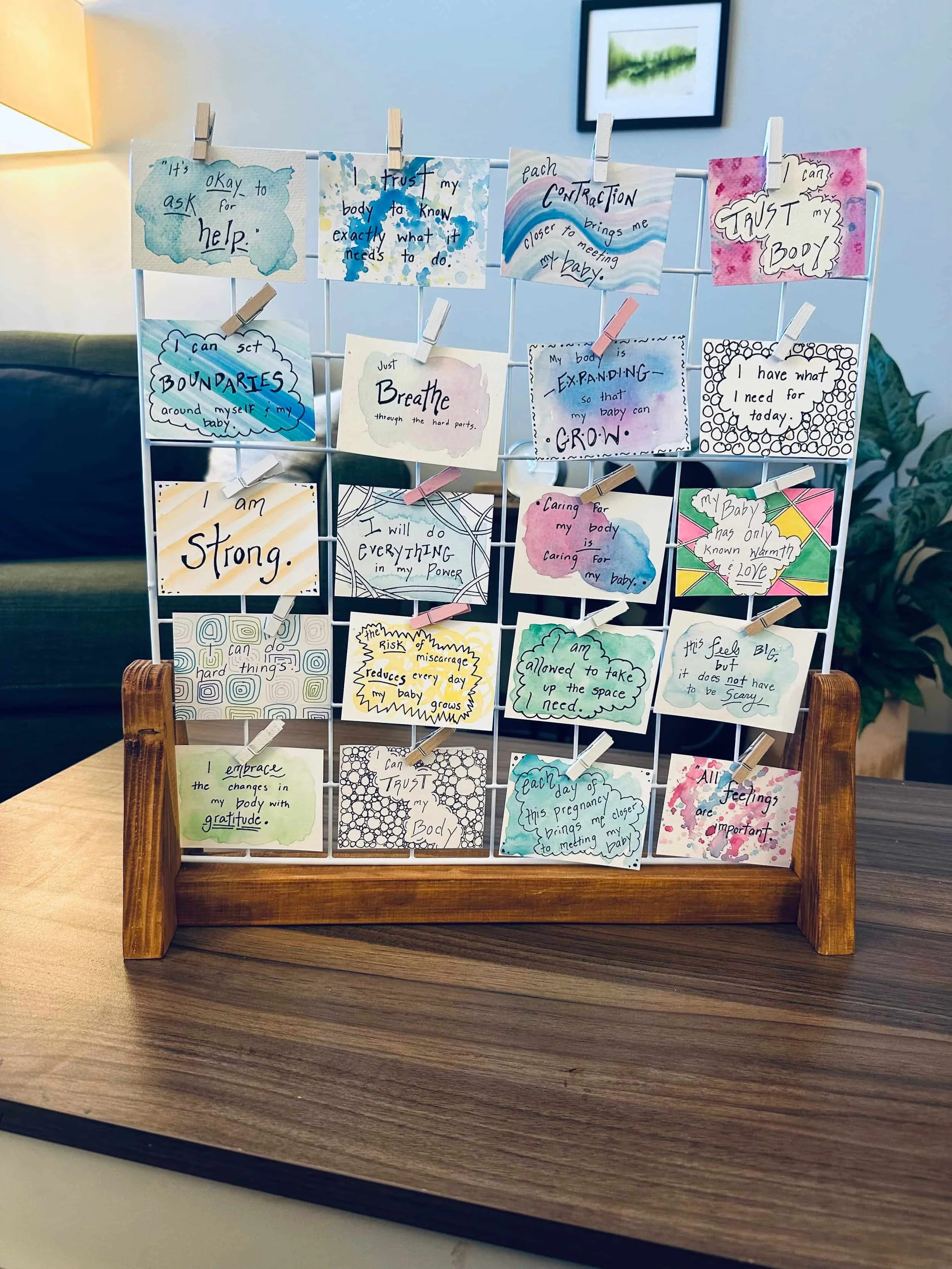
One of the tools in your tool box.
Affirmations are one piece of a much larger toolkit for managing anxiety. They work best alongside deeper support, like therapy, that helps address the roots of anxious patterns. If anxiety is something you're navigating regularly, know that you don't have to do it alone.
At Alanna Betts Art Therapy and Counseling, we help clients build practical, personalized tools for managing anxiety. We combining talk therapy, Art Therapy, and EMDR techniques to support real, lasting change. If you'd like support finding what works for you, we'd love to talk.